As part of our series of case studies for the MediaDev Insider exploring the resilience of media in crisis contexts, GFMD spoke with Tom Rhodes, Director of Ayin Network, about the realities facing Sudanese journalists, drawing on Gisa Group’s work and their engagement through the Sudan Media Forum, including displacement, insecurity and efforts to sustain independent reporting under extreme conditions.
Author: Communications GFMD | 12. February 2026
Share:
A climate of fear, surveillance, and self-censorship
Rhodes described a media environment in which journalists’ primary concern is survival rather than editorial freedom. He explained that self-censorship is not a choice but a condition imposed by violence, surveillance, and fragmentation of authority.
“All Sudanese journalists reporting from within the country must contend with some form of self-censorship to survive. Reporting from RSF-controlled areas likely forces you to use RSF-controlled internet servers, thereby exposing you to constant scrutiny.“If you report from the army-controlled areas, any advocacy for peace or attempts to balance your report (i.e., not simply condemning the RSF) may lead to your detention or worse. The great challenge does not necessarily come from the leaders of the warring parties since they do not exert full control over their forces.”
Coverage gaps and the silencing of entire regions
Insecurity has resulted in vast information blackouts across Sudan, particularly in conflict hotspots such as El Fasher. Journalists have been forced to withdraw from entire regions, leaving humanitarian crises largely undocumented and populations unheard.
“In fact, there are currently no journalists openly reporting from El Fasher due to the insecurity. Even those who attempt to report outside of El Fasher in relatively safer locations such as Tawila face harassment and censorship from authorities within another rebel group.”
The risk of arrest and detention by either warring party is perhaps the greatest threat since armed actors can detain journalists at any time, often without any charges raised. The situation has led to pockets of coverage in relatively safer areas, while huge swathes of the country remain underreported, given the insecurity.
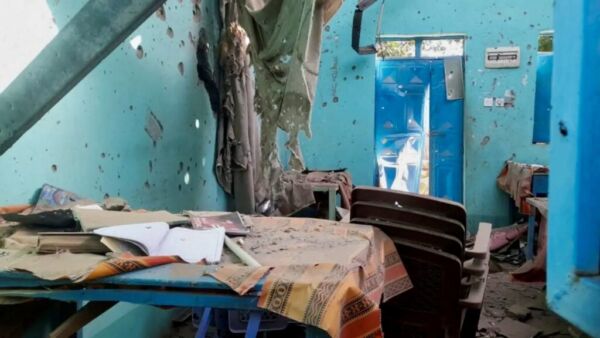
A classroom in El Fasher riddled with bullets (Reuters)
Rhodes acknowledged that international media assistance has provided critical short-term relief, particularly through emergency funds and relocation support. These mechanisms have helped journalists escape immediate danger, but they are insufficient to meet the scale and complexity of needs.
“Several press freedom groups have set up emergency support funds for journalists; this has proven effective in relocating journalists out of harm’s way and often provided a small respite of relief while they were displaced. Other organisations have set up fellowships and support services for a multitude of Sudanese journalists who are now in exile. Both efforts have been effective to some extent, but these support groups would also be the first to admit that the needs are far greater than the support provided.”
Gaps persist not only in funding, but also in internet connectivity and psychosocial support for displaced and traumatised reporters.
“Stand With Sudan” campaign, 2024
Rethinking solidarity and models of support
The Sudan Media Forum has advocated for certain media houses and individual journalists in distress and has conducted fundraising efforts to support them. But, according to Rhodes, these efforts remain ad hoc and piecemeal in nature. In most cases, support to journalists has come from informal support networks developed by local journalists and colleagues.
At the Ayin Network, for instance, we strive to support our team however possible – whether this means covering a medical bill or an emergency relocation. But again, these efforts are a drop in the ocean in comparison to the turbulent sea Sudanese journalists are swimming in.
Sudanese journalists from all backgrounds are targeted in this current war – whether state journalists or independent scribes – inducing a mass exodus outside the country. The outcome has been a significant population of exiled journalists, while only a few reporters are still operating within the country. A holistic support mechanism needs to be developed to support the exiled press’s continued operation, while new cadres of reporters need to be trained and supported (both financially and in terms of equipment and connectivity) in order for Sudan’s story to stay alive.
“Currently, the El Fasher area is experiencing one of the worst humanitarian tragedies, and no one is covering it. In this context, a new model of reporting needs to be developed that will require editors to amalgamate factual information collected from trusted and remotely trained citizens on the ground.”
Protecting the future of independent media in Sudan
Looking beyond immediate survival, Rhodes called for structural changes in how emergency media support is designed. He emphasised the need for less bureaucratic funding models that recognise operational costs as essential, and for regionally accessible mechanisms that allow applications in Arabic.
“I think we need to see beyond the plaster and identify an actual cure. Even in the safer areas of the country, the conflict has transformed society to support a war mentality where any reporting that supports a peace process or condemns human rights abuses perpetrated by the warring parties can put journalists at risk.”
He suggested that collaboration between media houses and citizens could help sustain independent reporting, while pooled emergency resources could allow journalists to focus on their work during crises. Rhodes stressed that nearly all journalists reporting within the country have lost equipment along the way – rectifying those losses with strategic equipment support could also prove extremely helpful.
Finally, he emphasised the need for stronger collaboration across media organisations to ensure advocacy efforts remain effective and to counter disinformation, warning against narratives that “ignore facts and peddle disinformation.”