Updated on 2 March 2026 to include additional information
African leadership in global debates on media sustainability
For the Media Leadership Think Tank at the Gordon Institute of Business Science (GIBS) in Johannesburg, the year 2025 marked a shift from agenda-setting to sustained influence and implementation in the Global South. Using South Africa’s hosting of the G20 as a springboard, the MLTT played a key role in organising the M20 Summit and the resultant Johannesburg Declaration.
With the key role of the MLTT’s Programme and Research Manager, Ompha Tshamano, they have been able to draw on a wide range of networks in Africa and across the world. As part of the CTRL+J tricontinental conference series, they co-hosted CTRL+J Africa at GIBS with the International Fund for Public Interest Media (IFPIM), bringing together 120 participants from 21 countries, with most speakers from across Africa and strong delegations from Brazil and Indonesia. The goal was not simply to respond to global debates, but to shape them from a Global South perspective.
As MLTT Director Michael Markovitz explained:
“At the CTRL+J Africa conference, participants were not just responding to agendas set elsewhere. They were shaping shared problem definitions, comparing regulatory strategies, and translating debates on platform power, AI, and media sustainability into regionally grounded priorities.”
The MLTT’s focus has been on building coalitions, influencing regulatory processes, and strengthening leadership capacity so that African perspectives carry weight in global forums.
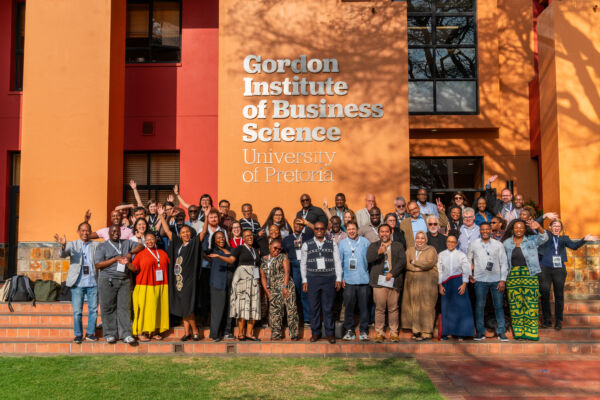
CTRL+J Africa Conference 2025
Progress and challenges since the Principles for Fair Compensation
The Principles for Fair Compensation, adopted at GIBS in 2023, were designed to be adaptable rather than prescriptive. According to Markovitz:
“The Principles for Fair Compensation have remained relevant because they deliberately avoided taking positions on specific regulatory mechanisms. Rather than prescribing a single model, they articulated shared principles and expectations that could be adapted to different regulatory and market contexts.”
In Africa, the most concrete progress on compensation has been in South Africa through the Competition Commission’s Media and Digital Platforms Market Inquiry (MDPMI) final report and its negotiated, enforceable settlement. The Think Tank participated in the South African National Editors Forum-led civil society alliance that engaged the Inquiry throughout its lifecycle. That alliance helped shape a rights-based framing and funding commitments that take effect immediately. The Commission’s final report was pragmatic, and although significant unfinished business remains, it represents a serious regulatory intervention by a Global South authority.
Elsewhere in Africa, progress has been mixed. Kenya and Nigeria have seen important legal precedents in the courts, but not yet on a scale that shifts market dynamics. Markovitz thus concluded that uneven regulatory progress highlights the importance of learning across the continent; gains in one place can inform others rather than remaining isolated.
Why South–South alliances matter
With the support of IFPIM, MLTT co-organised the CTRL+J tricontinental conference series, establishing partnerships with the Momentum Journalism and Tech Task Force in Brazil and the Indonesian Cyber Media Association (AMSI) in Indonesia.
South Africa, Brazil, and Indonesia are major media markets and political forces in their own regions. While none can represent their region’s full diversity, each offers scale, democratic experience, and regulatory know-how that help foster collaboration. Emerging from the conference series, the MLTT, Momentum, and AMSI, with IFPIM support, established the CTRL+J Alliance. This initiative focuses on sharing South-to-South and regional experiences, building confidence, supporting policymakers, and creating professional networks among peers facing similar challenges across contexts. Markovitz emphasised the strategic value of these partnerships:
“For a small think tank, alliances matter as they broaden our reach, share risk, and make it harder for powerful platforms or institutions to sideline or dismiss individual actors.”
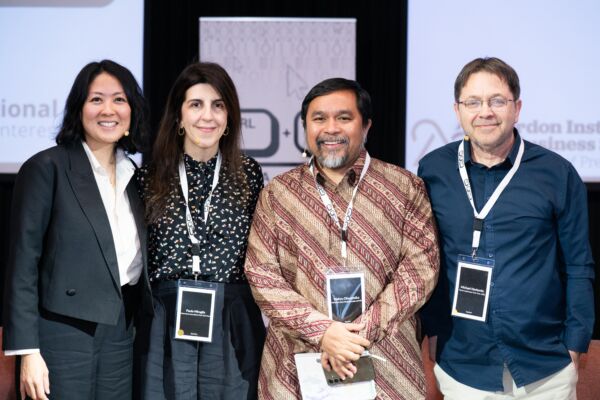
CTRL+J partners from left to right: Irene Jay Liu, Director, AI, Emerging Tech and Regulation, IFPIM; Paula Miraglia, Founder and CEO of Momentum – Journalism & Tech Task Force, Brazil; Wahyu Dhyatmika, Chairperson, Asosiasi Media Siber Indonesia (AMSI); Michael Markovitz, Director, Media Leadership Think Tank, GIBS, South Africa
The role of policy and democratic institutions
While philanthropy and corporate initiatives can support innovation, the Think Tank argues that structural problems require structural solutions.
“Philanthropy and corporate backing can spark innovation, but they obviously can’t fix structural power imbalances. Journalism can’t survive market failure on goodwill alone.”
For the Think Tank, this has meant staying engaged with policy and regulation, even when progress is slow or contested. The MDPMI shows what regulation can do: it sets enforceable obligations and provides immediate, if short-term, relief, rather than relying on voluntary promises. The same thinking applies to audiovisual policy reform of legacy broadcasting laws and to long-term funding debates for public service media such as the SABC.
At the same time, the Think Tank combines policy work with leadership development and institutional support to create more immediate impact while regulatory reforms take shape.
Designing inclusive, rights-based media support
Media support programmes work best when shaped with local partners, not imposed from outside. In South Africa, one outcome of the final MDPMI report was a shift in the Commission’s approach from a single, centralised journalism fund to recognising that multiple funds serve different parts of the ecosystem. This shift reflected current realities on the ground and the complexity of the media landscape.
The MLTT also focused on leadership, which is often missing in journalism support efforts. The GIBS Executive Programme in Media Leadership (EPML), which Markovitz co-created with Styli Charalambous, co-founder and CEO of Daily Maverick, is an Africa-rooted initiative that brings media leaders from across the continent together.
“The EPML launched its inaugural cohort in 2025, and we plan to launch a second intake this year, starting in July 2026. For a small think tank based at a business school, executive education is becoming one of our most effective ways to make an immediate impact, while policy changes unfold over time.”
Key focus areas for 2026
Looking ahead, the Think Tank is concentrating on three main priorities:
- Implementation: Monitoring the enforcement of regulatory remedies and any appeals.
- Inclusion: Ensuring smaller, community, and public-interest media are not left behind.
- AI governance: Defending publisher rights and preparing institutions for technological change.
Markovitz described the Think Tank’s approach:
“Our unique strength lies in integrating research, policy engagement, and leadership development, ensuring these interventions mutually reinforce one another for sustainable impact.”
Strengthening leadership for a resilient media future
Through the EPML, GIBS has identified leadership gaps that are often structural rather than purely individual.
“Media leaders now need to navigate regulation, technology, business models, and public accountability. Strategic thinking, coalition-building, and the ability to lead through ongoing disruption are now essential skills. Leadership isn’t about individual heroics; it’s about building collective resilience.”
Michael Markovitz argued that, without investing in leadership, other media support efforts will struggle to achieve lasting impact. Leadership development should be a cornerstone, not an add-on. Investigative journalism also needs steady support, as it’s among the most vulnerable, yet most vital, forms of public interest journalism.
More broadly, he stressed the need for durable institutions and coordinated action:
“More broadly, priorities need to move from short-term projects to long-term systems: building lasting institutions, coordinating coalitions, and enforcing real policies. For small organisations like the MLTT, sustainability comes from focus, partnerships, and staying grounded in practical work.”