As part of GFMD’s 20th anniversary celebrations, we’re delighted to share another feature in our Member Spotlight Series, showcasing the inspiring work of GFMD members driving positive change in media worldwide.
This month, we’re spotlighting Abzas Media, an independent investigative outlet from Azerbaijan dedicated to exposing corruption, documenting abuses of power, and defending the public’s right to know. Despite state repression, prosecution, and forced exile, Abzas Media has demonstrated remarkable courage and resilience, continuing its investigative work and unwavering support for press freedom.
Author: Communications Gfmd | 3. March 2026
Share:
Mission and Approach
Founded in 2016 by young civil society members in Azerbaijan, Abzas Media was created to report on issues that are often ignored or suppressed in state-controlled media, including corruption, misuse of public resources, and human rights violations. Their investigations have included reporting on corruption and financial networks connected to the Aliyev regime. Investigative reports such as “How Did a High-Ranking Azerbaijan Official Acquire a Multi-Million Property in France?” and “Former Aliyev Son-in-Law Receives Big Contract to Host COP29 Guests” shed light on corruption and financial networks linked to senior officials, including the president’s family and their close circle. Read more Abzas Media reports here.
In November 2023, Abzas Media became the first target of a wider crackdown on independent media in Azerbaijan. Several members of their newsroom were arrested on financial charges that international organisations have described as politically motivated. Six of their colleagues, including three women journalists, are now serving long prison sentences ranging from 7.5 to 9 years in connection with this case. Today, their mission is inseparable from the broader struggle for press freedom and civic space in Azerbaijan. Following these arrests, Abzas Media’s work is driven not only by journalistic responsibility but also by solidarity and urgency. Independent journalism in the country has been put under severe pressure, yet Abzas Media has continued reporting from exile, driven by the belief that independent journalism is as essential as ever. What drives them is the belief that even in the most restrictive environments, truthful reporting matters.
Recent Achievements
Over the past 12–18 months, Abzas Media survived and continued working after becoming the first target of the current crackdown on independent media in Azerbaijan. The media was the first newsroom to be raided: their office was sealed, their equipment was confiscated, and their journalists were arrested following their investigations into corruption at the highest levels of power. What started with Abzas Media later expanded into a broader crackdown affecting many other journalists and independent outlets. Abzas Media is especially proud of their imprisoned colleagues who have continued to write and send articles and even do investigations from prison. They have turned cold prison walls into a newsroom. The government tried to silence them, but they showed that journalists who are committed to the truth cannot be silenced.
Today, independent journalism inside Azerbaijan has almost disappeared. Many journalists have left the profession or fled the country. Others have been questioned, placed under financial pressure, or given travel bans. In this situation, continuing Abzas Media’s investigations and publishing from exile has been their biggest achievement. Their work and the courage of their colleagues have been recognised through several international awards:
European Press Prize Special Award 2025 for their work on the Baku Connection project, which is an investigation into the abuses of the powerful Aliyev regime, delving into issues of corruption, pollution, and human rights.
But above all, Abzas Media are proud that they continue the work of their imprisoned journalists and keep Abzas Media alive.
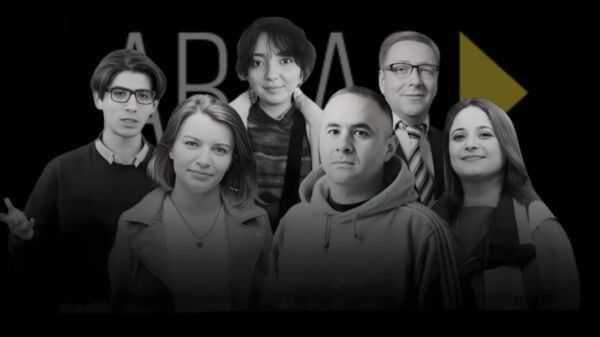
Abzas Media’s Mahammad Kekalov, (left) Sevinj Vagifgizi, Elnara Gasimova, Ulvi Hasanli, Hafiz Babali, and Nargiz Absalamova. The journalists face up to eight years in prison on currency smuggling charges, as Azerbaijan cracks down on independent media
Impact on Communities and the Media Landscape
Abzas Media’s website is blocked inside Azerbaijan, but their reporting continues to reach people through mirror sites and social media. Despite the block, the website received over a thousand visits from active users in the last 7 days. Users from inside Azerbaijan continue to seek access to their content, often relying on VPNs and mirror links to read their reporting. Across their platforms, they continue to reach a large audience inside Azerbaijan and in the diaspora. Their Facebook page has over 117,000 followers, their Instagram has over 92,000 followers, and their YouTube page has garnered over 63,000 subscribers. Abzas Media keeps close watch over their social media analytics, and is pleased to observe that their accounts have already been viewed millions of times in 2026.
Abzas Media’s impact is also symbolic. The raid on their newsroom and the prison sentences against their colleagues were meant to silence not only Abzas Media but independent journalism on a broader level. By continuing to publish and by amplifying the voices of their imprisoned colleagues, they have helped keep public attention on corruption, accountability, and press freedom in Azerbaijan.
Challenges and Strategic Approaches
Abzas Media’s main challenge today is rebuilding and stabilising its work in exile. Operating as an exiled media organisation means working across different countries, time zones, and legal systems while trying to maintain daily reporting and long-term investigations. It also means dealing with financial instability, security concerns, and the emotional strain of continuing work while colleagues remain in prison. They have observed the following three challenges:
Working from exile requires adaptability. Abzas Media’s team now works from different countries and time zones, connected mostly through the internet. Over time, they have built a virtual, portable newsroom that exists in encrypted chats. Because of safety protocols, not everyone on the team knows each other personally. Yet some colleagues collaborate closely without ever meeting and still produce strong work together. It is an unusual way to run a newsroom, but it has taught them how trust and teamwork can grow even across distance.
Exiled media are increasingly affected by transnational repression. Pressure does not stop at national borders – it can include surveillance, online harassment, smear campaigns, and financial restrictions. This creates a constant need for stronger digital security, safer organisational structures, and reliable international partnerships. Like many exiled outlets, Abzas Media must invest time and resources not only in journalism but also in safety, legal stability, and long-term sustainability.
Stepping into the role of activists. Another challenge is that their role has expanded. They are not only reporting the news but also advocating for press freedom and for the release of their imprisoned colleagues. Over the past year, they have taken part in public events, discussions, and international campaigns to ensure that their cases remain visible. Balancing journalism with advocacy has become part of their daily reality as an exiled newsroom.
At the same time, there are important steps forward. Abzas Media in Belgium has been officially registered as a non-profit organisation. This gives them a more stable legal base in Europe and helps them build partnerships and plan for long-term sustainability. This will also allow to strengthen their organisational structure, secure funding, and create safer working conditions so they can continue their investigative reporting and remain connected to audiences inside Azerbaijan and in the diaspora.
Reflections on GFMD Membership
“Working in exile can feel isolating, especially when colleagues are imprisoned and the media space at home is shrinking. Journalism, for us, is not just a profession, it is a responsibility, almost a sacred duty. It is painful that we cannot freely do our work inside our own country, and that we cannot even speak to some of our colleagues for years. But being part of GFMD reminds us that independent media are connected across borders. Knowing that journalists around the world face similar isolation, struggles, and even small victories give us strength. These networks provide not only visibility, but also community, solidarity, and the motivation to continue when stopping would be easier.”
– Gunel Safarova, Acting Director & Editor-in-Chief at Abzas Media
Connect with Abzas Media
Abzas Media welcomes audiences, journalists, and media professionals to reach out.